India,

7:29:03 am

optimizing cro and onboarding

optimizing cro and onboarding

background

nirva health is a yc w21 backed healthtech platform delivering personalized lifestyle medicine support to patients between clinical appointments.
nutrition, breathwork, sleep, therapeutic movement, all through an ai powered app.

the product was live and growing, but the onboarding had friction and the user journey wasn't converting the way it needed to.

nirva health is a yc w21 backed healthtech platform delivering personalized lifestyle medicine support to patients between clinical appointments.
nutrition, breathwork, sleep, therapeutic movement, all through an ai powered app.

the product was live and growing, but the onboarding had friction and the user journey wasn't converting the way it needed to.

challenge

how do you optimize a healthcare product onboarding and user journey when the product is already live, the team is moving fast, and every change has to be data backed before it ships?

my role

as ux project manager.
led cro optimization of the user journey and mobile app onboarding.
owned design and development timelines, ran web front analytics, and collaborated across design, engineering, and product.

as ux project manager.
led cro optimization of the user journey and mobile app onboarding.
owned design and development timelines, ran web front analytics, and collaborated across design, engineering, and product.

outcomes

  • redesigned the mobile and website onboarding flow, reducing drop off at key friction points

  • streamlined ux iteration cycles by 15% through tighter design and engineering alignment

  • delivered three major product features on time, contributing to a 33% increase in mau

  • improved user satisfaction by 20% and engagement by 10% post onboarding improvements
the full story

the full story

nirva health helps people with chronic and lifestyle related conditions manage their health daily.
gut health, metabolic issues, hormonal health, mental wellbeing, all supported through a personalized ai powered app that works alongside clinicians, not instead of them.

the product had strong outcomes data and a growing user base.
but the onboarding experience was creating friction before users even reached the value.
my job was to find the drop off, fix it, and do it fast.

nirva health helps people with chronic and lifestyle related conditions manage their health daily.
gut health, metabolic issues, hormonal health, mental wellbeing, all supported through a personalized ai powered app that works alongside clinicians, not instead of them.

the product had strong outcomes data and a growing user base.
but the onboarding experience was creating friction before users even reached the value.
my job was to find the drop off, fix it, and do it fast.

where things were breaking

where things were breaking

1. onboarding was too long and too generic
users were dropping off before completing onboarding. the flow asked too many questions upfront without giving users a sense of what was coming. the value reveal came too late.

2. invisible friction points in the user journey
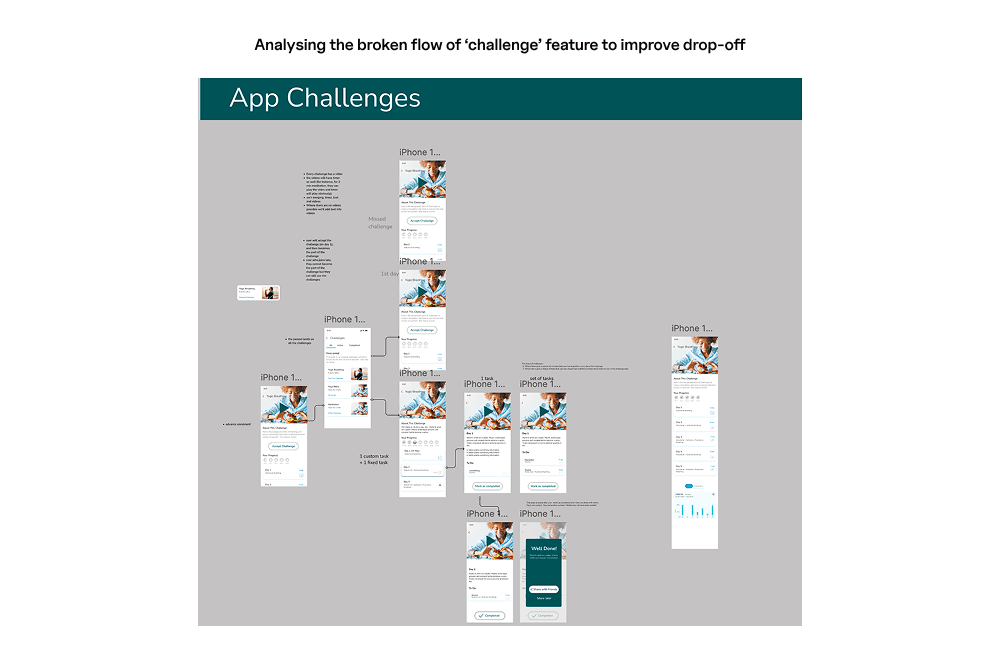
analytics showed users were getting stuck in specific parts of the app but the why wasn't clear. we needed to dig into the data before we could fix anything.

3. project timelines were slipping
feature delivery was taking longer than it needed to. design and engineering weren't always aligned on scope, which meant rework was happening downstream and slowing everything down.

1. onboarding was too long and too generic
users were dropping off before completing onboarding. the flow asked too many questions upfront without giving users a sense of what was coming. the value reveal came too late.

2. invisible friction points in the user journey
analytics showed users were getting stuck in specific parts of the app but the why wasn't clear. we needed to dig into the data before we could fix anything.

3. project timelines were slipping
feature delivery was taking longer than it needed to. design and engineering weren't always aligned on scope, which meant rework was happening downstream and slowing everything down.

how i approached it

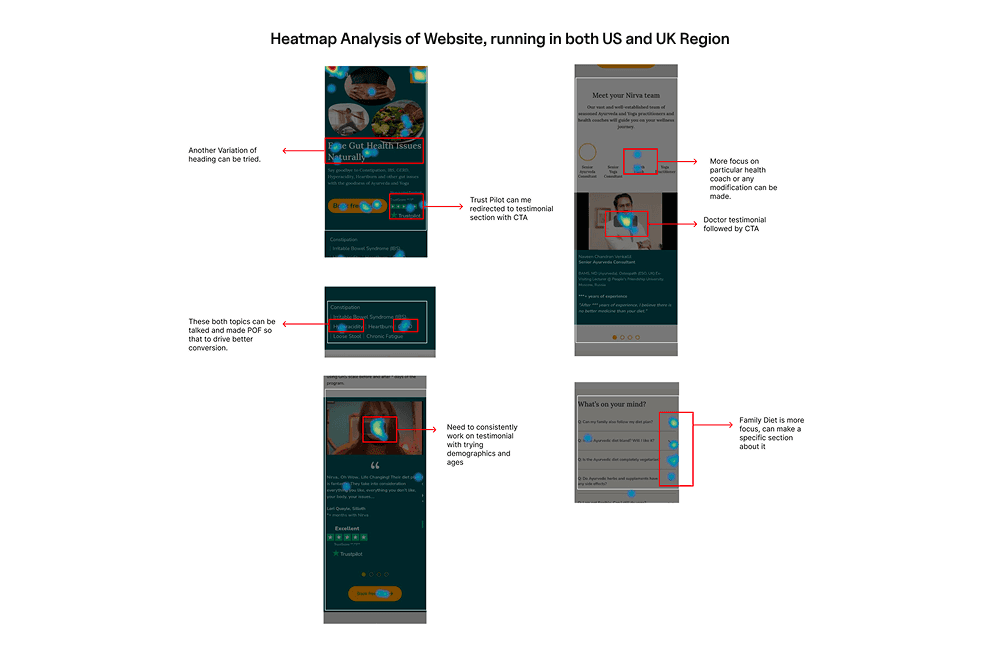
started with the data. pulled web and app analytics to map exactly where users were dropping off in the onboarding flow and in the core product experience.

then went qualitative.
ran user feedback sessions with active cohort members to understand what felt confusing, what felt reassuring, and what made them trust the app enough to keep going.

started with the data. pulled web and app analytics to map exactly where users were dropping off in the onboarding flow and in the core product experience.

then went qualitative.
ran user feedback sessions with active cohort members to understand what felt confusing, what felt reassuring, and what made them trust the app enough to keep going.

initial research

mapped the full onboarding journey against drop off data. identified three specific screens where users were consistently exiting without completing the flow.

what users kept saying:

  • i didn't understand what i was signing up for

  • there were too many questions before i could see anything

  • i wasn't sure if this was actually built for my condition


the pattern was clear. users needed to feel understood before they were willing to give information. the flow had it backwards.

mapped the full onboarding journey against drop off data. identified three specific screens where users were consistently exiting without completing the flow.

what users kept saying:

  • i didn't understand what i was signing up for

  • there were too many questions before i could see anything

  • i wasn't sure if this was actually built for my condition


the pattern was clear. users needed to feel understood before they were willing to give information. the flow had it backwards.

strategy & direction

flipped the onboarding approach, lead with empathy and value, collect data after.
focused on:
— reordering the onboarding flow to surface value earlier
— reducing question count in the first session
— adding condition-specific messaging at key decision points
— tightening design-engineering handoffs to reduce rework and timeline slippage

flipped the onboarding approach, lead with empathy and value, collect data after.
focused on:
— reordering the onboarding flow to surface value earlier
— reducing question count in the first session
— adding condition-specific messaging at key decision points
— tightening design-engineering handoffs to reduce rework and timeline slippage

what we did

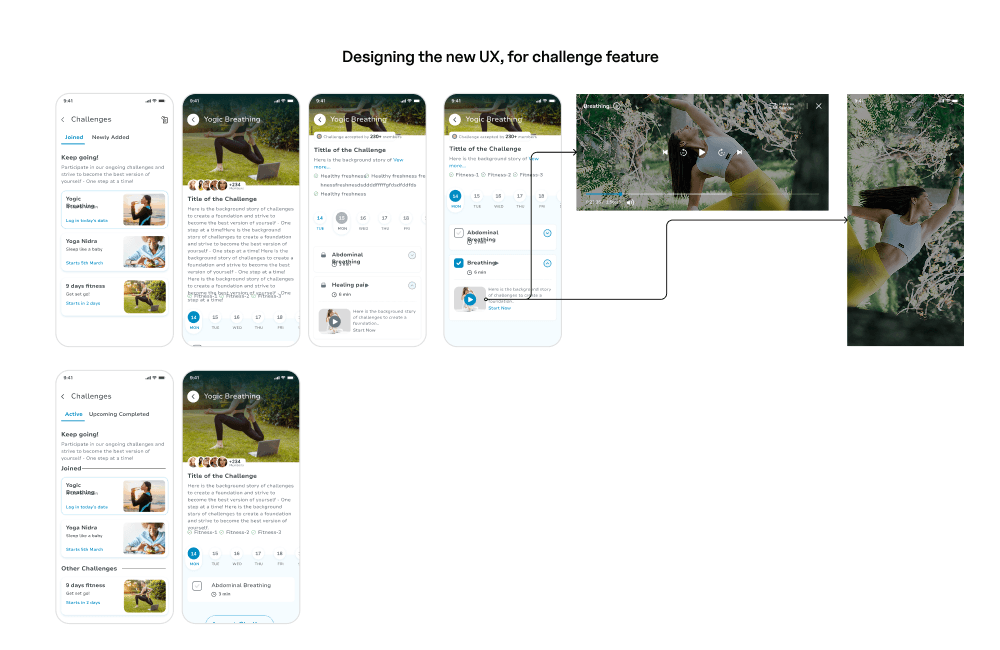
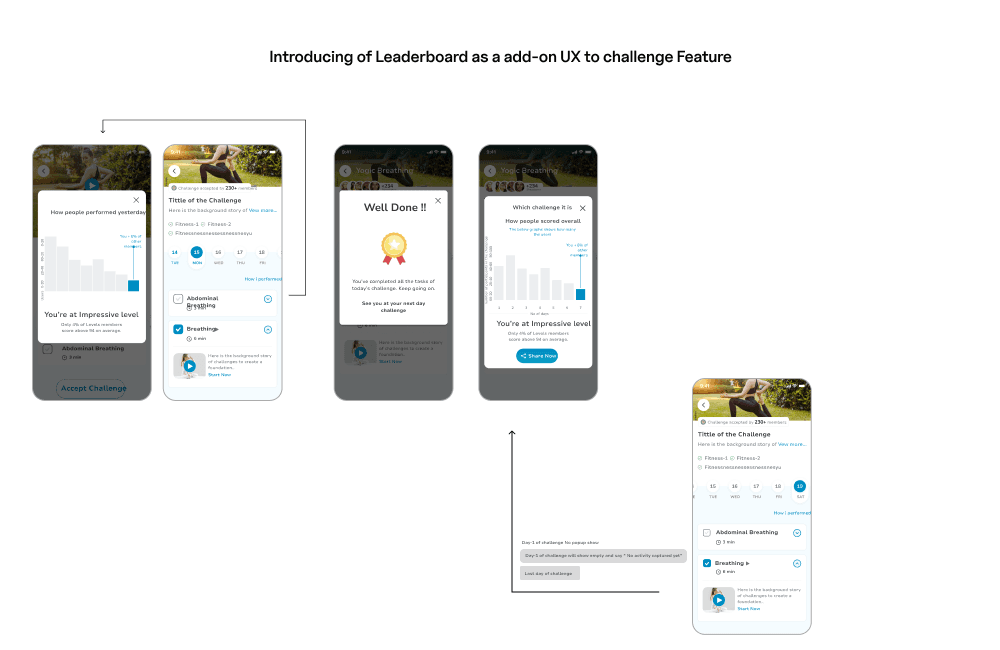
redesigned the onboarding flow end to end.
restructured the information architecture so users felt value and relevance before being asked for personal health data.

ran ongoing ux iteration cycles, 15% faster than before, by tightening the feedback loop between research, design, and engineering.

owned the delivery timeline for every design and development phase. introduced a lightweight tracking system that kept the team aligned and reduced unnecessary back and forth.

redesigned the onboarding flow end to end.
restructured the information architecture so users felt value and relevance before being asked for personal health data.

ran ongoing ux iteration cycles, 15% faster than before, by tightening the feedback loop between research, design, and engineering.

owned the delivery timeline for every design and development phase. introduced a lightweight tracking system that kept the team aligned and reduced unnecessary back and forth.

the impact of work

~33%

increase in monthly active users after feature delivery

+20%

boost in user satisfaction from optimized onboarding

~10%

increase in user engagement post onboarding improvements

~15%

faster ux design iteration cycles through tighter process alignment

key learnings

  • onboarding is the product's first impression and its hardest design problem. if users don't feel the value before the friction, they leave.

  • analytics tell you where. user research tells you why. you need both before you touch the design.

  • in healthtech, trust is the conversion metric. users aren't just deciding if the app is easy to use. they're deciding if they trust it with their health.

  • timeline ownership is a design skill. keeping design and engineering aligned on scope and delivery is as important as the design work itself.