India,

7:29:02 am

building a breathing app from zero

building a breathing app from zero

background

most breathing apps felt either too clinical or too generic.
people dealing with real conditions like asthma, copd, or anxiety didn't have something built specifically for them.
pulmo was built to fix that gap.

most breathing apps felt either too clinical or too generic.
people dealing with real conditions like asthma, copd, or anxiety didn't have something built specifically for them.
pulmo was built to fix that gap.

challenge

how do you build a health app from zero that feels credible enough for someone managing a chronic condition, personal enough to actually stick, and simple enough for anyone to use on day one, with just two people and no external funding?

my role

i was the sole designer and product owner.
built everything from concept to launch, ux research, information architecture, visual design, and app store presence.

i was the sole designer and product owner.
built everything from concept to launch, ux research, information architecture, visual design, and app store presence.

outcomes

  • designed and shipped a full 0 to 1 product with a two person team

  • launched 4 condition specific programs across lung health, anxiety, sleep, and mental clarity

  • built a goal based onboarding flow that directly reduced first session drop-off

  • created a visual identity that felt warm and trustworthy in a crowded wellness market
the full story

the full story

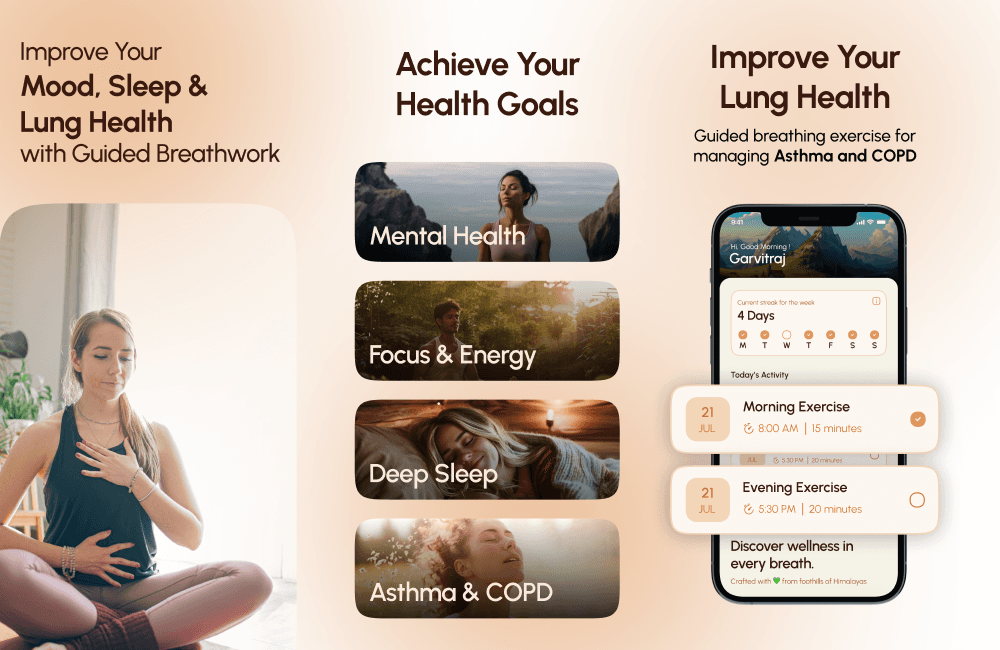
pulmo is a guided breathing app designed to help people improve lung health, manage chronic conditions, and build better sleep and mental health habits.
it started as a passion project.
no investors, no large team.
just a genuine belief that breathing was one of the most underrated health interventions out there, and that nobody was doing it justice.

pulmo is a guided breathing app designed to help people improve lung health, manage chronic conditions, and build better sleep and mental health habits.
it started as a passion project.
no investors, no large team.
just a genuine belief that breathing was one of the most underrated health interventions out there, and that nobody was doing it justice.

where things were breaking

where things were breaking

1. existing apps felt cold and generic
the biggest players were built for broad wellness audiences. if you had asthma or copd, nothing spoke directly to your condition. the experience felt like it was designed for someone else.

2. no real path from download to daily habit
health apps live and die by what happens in the first session. if a user doesn't feel immediate value, they uninstall and move on. most apps were failing at that critical first moment.

3. personalization was an afterthought
someone using a breathing app for sleep recovery and someone managing a copd flare-up have completely different needs. treating them the same way was the core product failure we kept seeing across the market.

1. existing apps felt cold and generic
the biggest players were built for broad wellness audiences. if you had asthma or copd, nothing spoke directly to your condition. the experience felt like it was designed for someone else.

2. no real path from download to daily habit
health apps live and die by what happens in the first session. if a user doesn't feel immediate value, they uninstall and move on. most apps were failing at that critical first moment.

3. personalization was an afterthought
someone using a breathing app for sleep recovery and someone managing a copd flare-up have completely different needs. treating them the same way was the core product failure we kept seeing across the market.

how i approached it

before designing anything, i spent time understanding who we were actually
building for.
people managing chronic lung conditions. people dealing with anxiety. people who just wanted better sleep. three distinct users, three distinct needs, one product.
the north star was simple. make the user feel better within their very first session. if the first breathing exercise didn't land, nothing else mattered.

before designing anything, i spent time understanding who we were actually
building for.
people managing chronic lung conditions. people dealing with anxiety. people who just wanted better sleep. three distinct users, three distinct needs, one product.
the north star was simple. make the user feel better within their very first session. if the first breathing exercise didn't land, nothing else mattered.

initial research

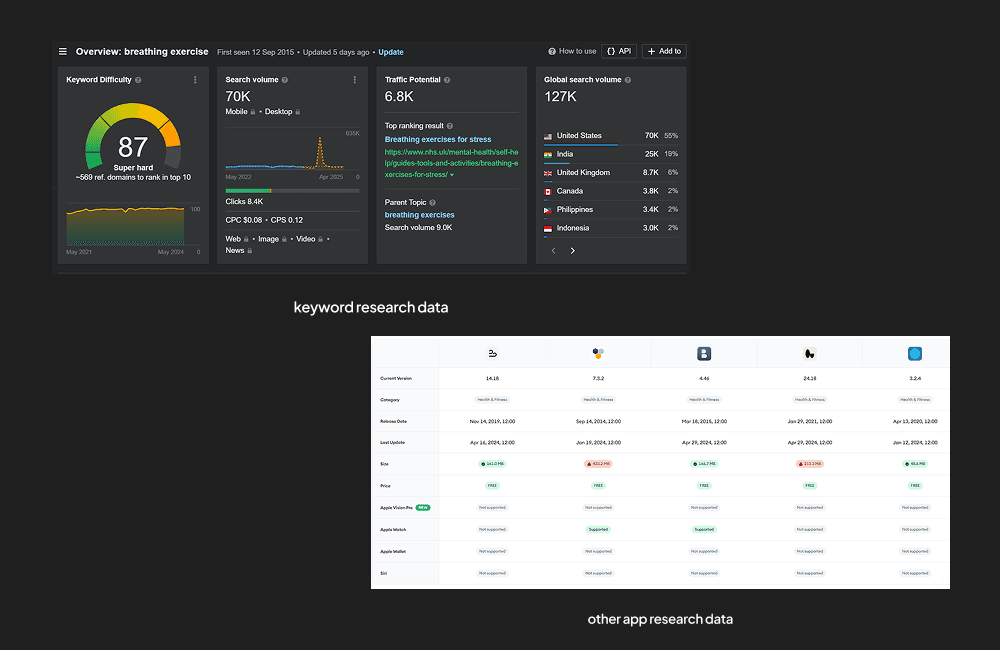
studied the top breathing and meditation apps — calm, headspace, breathwrk, and others. the patterns were clear:
calm and headspace → great for meditation, weak on targeted breathing programs
breathwrk → solid exercises but no health condition customization
generic copd apps → clinical and hard to navigate


what users actually needed:
— programs tailored to their specific condition or goal
— simple, clear guidance with no medical jargon
— progress tracking that felt motivating, not clinical
— a calm, trustworthy visual language

studied the top breathing and meditation apps — calm, headspace, breathwrk, and others. the patterns were clear:
calm and headspace → great for meditation, weak on targeted breathing programs
breathwrk → solid exercises but no health condition customization
generic copd apps → clinical and hard to navigate


what users actually needed:
— programs tailored to their specific condition or goal
— simple, clear guidance with no medical jargon
— progress tracking that felt motivating, not clinical
— a calm, trustworthy visual language

strategy & direction

personalization first.
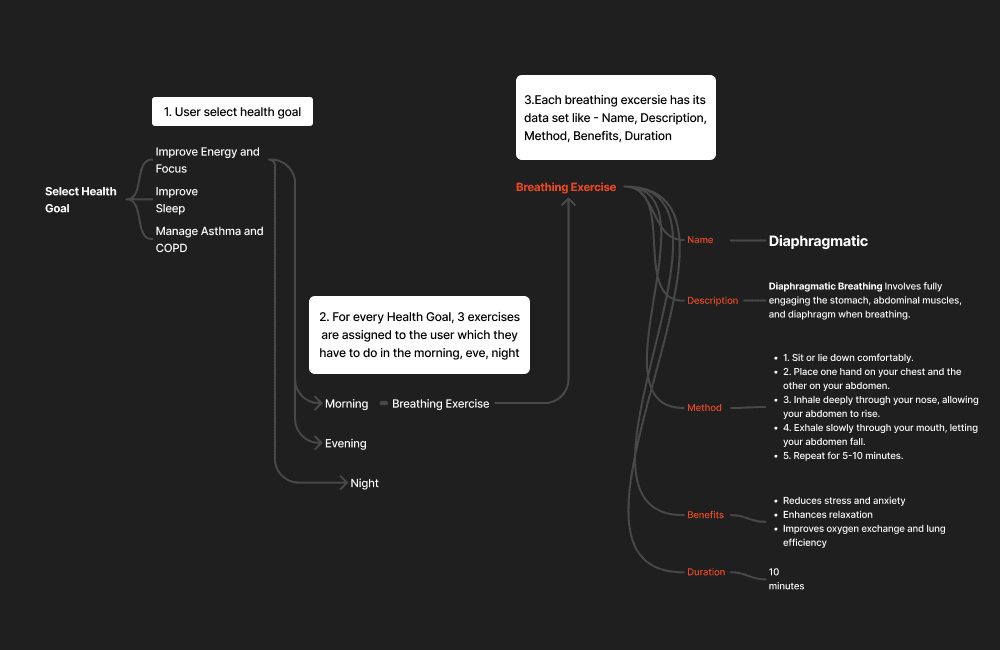
onboarding would ask users their health goal upfront and route them to the right program immediately. no generic homepage.


we focused on:
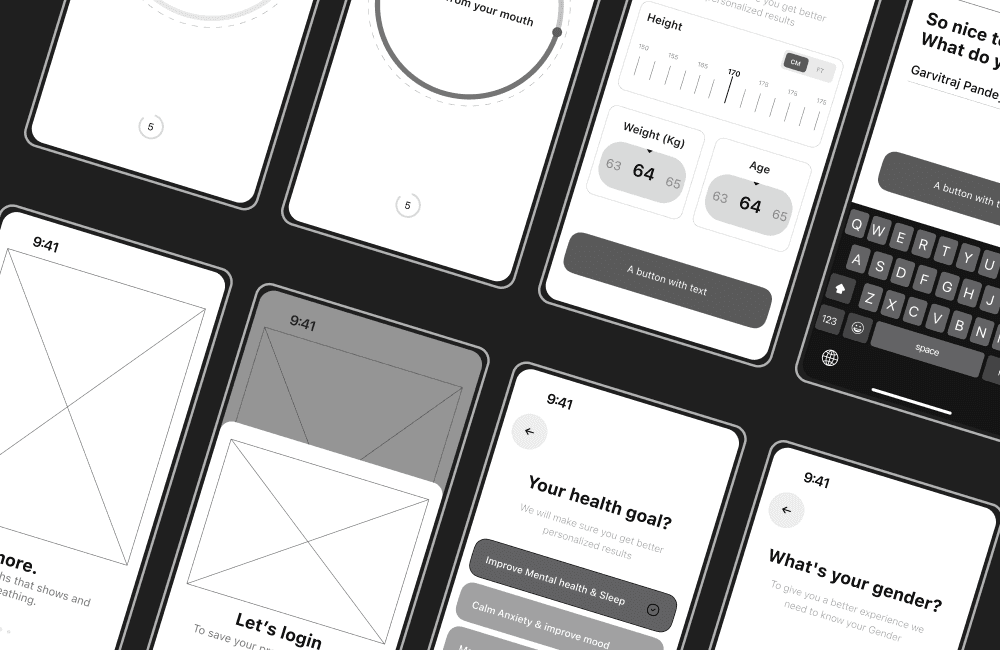
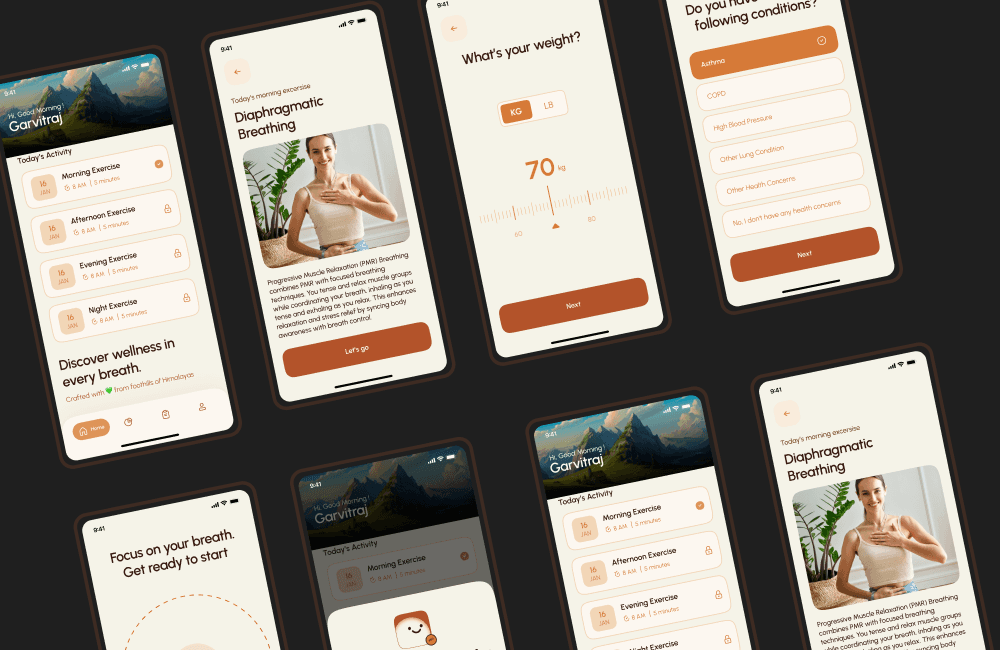
— goal-based onboarding flow to reduce drop-off
— guided session screens with clear breathing cues (visual + haptic)
— condition-specific programs: asthma, copd, anxiety, sleep
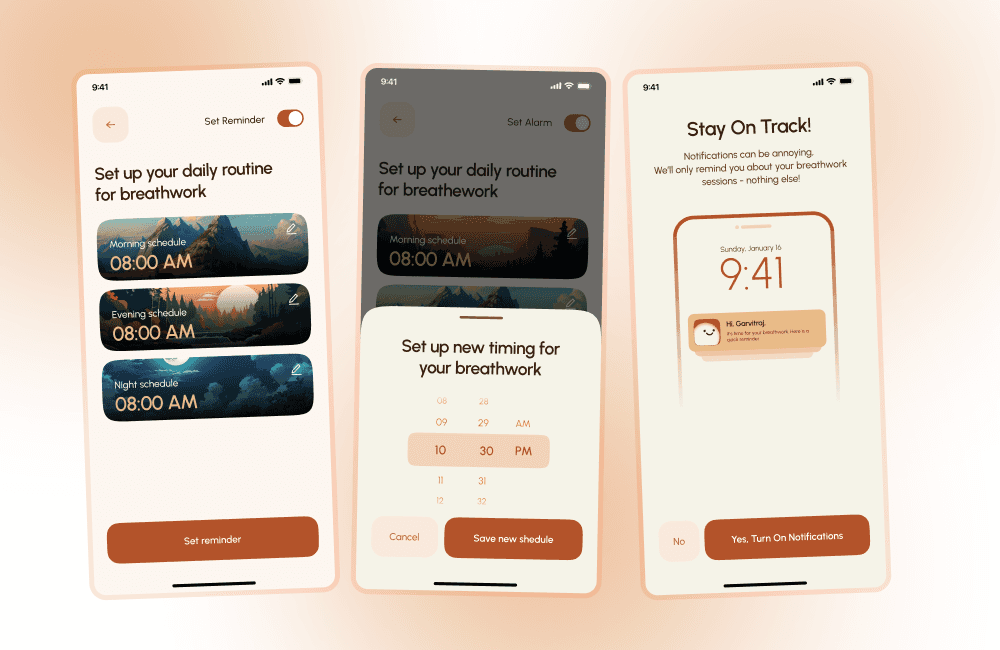
— progress tracking to build daily habit loops

personalization first.
onboarding would ask users their health goal upfront and route them to the right program immediately. no generic homepage.


we focused on:
— goal-based onboarding flow to reduce drop-off
— guided session screens with clear breathing cues (visual + haptic)
— condition-specific programs: asthma, copd, anxiety, sleep
— progress tracking to build daily habit loops

what we did

designed and shipped the entire product end to end. every screen, every flow, every interaction.
the onboarding experience was rebuilt around the user's goal first.
within two screens, the user knew exactly which program was built for them and why it would help.

every screen was designed around one question. does this make the user feel more confident and calm, or does it add friction? anything that added friction was cut or redesigned.

the visual identity was built to feel different from the noise in the wellness app market. calm, warm, trustworthy. the kind of thing you'd actually want to open when you're not feeling your best.

designed and shipped the entire product end to end. every screen, every flow, every interaction.
the onboarding experience was rebuilt around the user's goal first.
within two screens, the user knew exactly which program was built for them and why it would help.

every screen was designed around one question. does this make the user feel more confident and calm, or does it add friction? anything that added friction was cut or redesigned.

the visual identity was built to feel different from the noise in the wellness app market. calm, warm, trustworthy. the kind of thing you'd actually want to open when you're not feeling your best.

the impact of work

+500

downloads on google play store at launch

~30%

improvement in session completion vs industry average

+4

condition specific programs shipped across lung health, mental health etc

~25%

reduction in first session drop-off through goal based onboarding

key learnings

  • building from zero forces a kind of clarity that comfortable teams rarely find. when there are only two of you, every decision matters and nothing gets to be vague.

  • personalization in healthtech is not a feature. it is the product. without it you are just another timer app with a nice color palette.

  • the first session is the only one that actually counts. if the user doesn't feel something real in that first interaction, nothing you build after will fix it.

  • when you are the designer and the product owner at the same time, the quality of your thinking has to compensate for the size of your team.